• Home
  • About

Life and Deaf

~ Sometimes life rearranges our plans.

Life and Deaf

Tag Archives: disabled people

Who’s disabled?

14 Tuesday Jul 2015

Posted by Karen Lloyd AM in Hearing and deaf

≈ 5 Comments

Tags

deaf, Deaf Australia, Deaf community, disabled people, Drisana Levitzke-Gray

IMG_3831_Crop

A few years ago, lolling about in Mum and Dad’s pool with one of my sisters, she and I had a conversation about disability politics, during which I referred to myself as disabled.

My sister stopped lolling and stared at me.

“You’re not disabled!” she said, shocked.

“Yes, I know,” I said. “You and I don’t see me as disabled, but society does.”

“I’ve never thought of you as disabled,” she said. “It’s never occurred to me to think of you that way! You’re just you. A bit different. But disabled? No way!”

A few days later, she said, “I can’t get over this idea of you as disabled! I’m so shocked. It’s ridiculous that people see you that way!”

On Monday 13th July, appearing on ABC channel 24 with the other 2015 Australians of the Year, Young Australian of the Year Drisana Levitzke-Gray said: “Deaf people don’t see ourselves as disabled. We see it as deaf gain rather than hearing loss.”

It wasn’t long before someone named Tony commented on Twitter: “You don’t have a sense of hearing. Deaf people are disabled. Deal with it.”

Drisana said many things during this live television broadcast. She talked about being the fifth generation of deaf activists in her family, four of them women, and about deaf people’s human rights, in particular their right to use Auslan. She talked about the need for access.  She talked about the government cutting Deaf Australia’s funding and the impact this has on advocacy for deaf people’s human rights. She talked about how she deals with criticism and people’s expectations of her. But this one small comment about disability was the one thing Tony homed in on.

Who’s this guy Tony? Who cares what he thinks?

But his comment is typical of the social attitude I was referring to in my conversation with my sister.

It is typical of the bigotry exemplified many years ago by a journalist who, when I objected to his use of the term ‘deaf and dumb’, said that it was a perfectly acceptable term to use because all his friends used it.

It is typical of the widespread practice in our society of seeing anyone who is different as ‘other’ and in need of changing to fit whatever is perceived as the ‘norm’.

This question of whether or not deaf people are disabled arises regularly. Deaf people often talk about it. Deaf people and hard of hearing people don’t always agree about it. Non-deaf people are frequently baffled by it.

Hard of hearing people or people who become deaf later in life often do experience their deafness as a loss and see themselves as disabled. Many of these people refer to themselves as hearing-impaired.

For people who are born deaf or become deaf early in their life, being deaf is a normal state of being, we don’t feel we have lost anything, and we dislike the term hearing-impaired: we don’t see ourselves as impaired.

For many of us, being deaf adds a dimension to our life. It brings a different way of experiencing and interacting with the world. When we embrace Auslan and the Deaf community, it brings us a wonderfully rich and expressive language, a unique culture and a world-wide community of friends, understanding, acceptance and belonging that transcends borders, race, religion, gender, politics.

This was what Drisana was talking about when she used the term ‘deaf gain’.

But people like Tony find this hard to understand. Indeed, they often don’t even stop to think about what Drisana might have meant. They see only the absence of hearing and see attempts to explain this different ‘deaf gain’ reality as a denial of reality – their reality.

I was often asked about this issue during the years I was an advocate with Deaf Australia. Many people pointed out that organisations like Deaf Australia received funding from disability programs. How then, they asked, could we say we weren’t disabled?  We had to decide what we were one way or the other, we couldn’t have it both ways.

Ah but we could, I argued. And this is how I explained it:

Disability is relative. If you’re a hearing person and you can’t sign, and you walk into a room full of deaf people communicating in Auslan, who’s disabled?  You or all these deaf people?  Who needs an interpreter?  You or all these deaf people?

By ourselves, and with each other, deafness doesn’t disable us, we just find our own ways of doing things.

It is when we go out into an environment designed by people who hear, for people who hear, that we become disabled. It is not our deafness that disables us, it is the environment, limitations and expectations that are imposed on us by others who are unlike us.

For six years from 2008 to 2013 I was a member of the National People with Disabilities and Carers Council, which provided advice to the Minister and Parliamentary Secretary for Disabilities. The Council, a large and wonderfully eclectic group, was handpicked mainly by Bill Shorten and after its first meeting, a group of us sat in the Qantas lounge at Canberra airport, discussing how we’d first met Bill Shorten and how unusual he was for a politician in that he seemed to ‘get it’ about disability.

I related the story of how I’d used the ‘in a room full of deaf people, who’s disabled?’ explanation when I first met Bill. In our group was Milly Parker, who went on to become a well-known disability advocate. Milly, who has a brain injury, runs her own business, making gourmet dog food and selling it internationally.

She listened to my story and said, “That’s right, Karen! In my business and my home everything is set up in a way that works for me and I’m not disabled. I only become disabled when I go out into a different environment and other people put their expectations and limitations on me.”

During many years of working with people with all kinds of ‘disability’ I have learned that deaf people aren’t the only ones who don’t see themselves as disabled. We aren’t the only ones who wish that other people would stop trying to change us and put road blocks in our way.

Elizabeth Hastings, the first Disability Discrimination Commissioner put it this way:

“…disability is part of the human community… Certainly disability is not always convenient, attractive or desirable, but it is an ordinary attribute of being human. Even though my disability is also not especially convenient, attractive or desirable, it is my life and I have absolutely no wish for it to be otherwise. Not everybody will feel the same way about his or her circumstances. However many people with disabilities do think and feel the way I do – that we do not wish to be altered, cured or transformed. We do wish our equipment would work reliably, and that education, transport, shopping and professional and other services, work, entertainment, banking, insurance and information were accessible to us.” 1

When I was Executive Officer at Deaf Australia I often worked with Damian Griffis, Executive Officer at First People’s Disability Network. One of the things that Damian often explained at various meetings was that in traditional language there was no word for the concept of disability. Aboriginal people with disability are supported and accepted as members of their community.

So who’s disabled?

Isn’t everyone, in some way, sometime? At the end of the day it really doesn’t matter.  What is important is how we make the most of what we have, how we live our lives, how we treat other people and how our society supports and accepts us.  As Elizabeth Hastings put it, disability is part of the human condition. It’s normal.

And to people who would like to think it isn’t, I say: deal with it.

  1. Hastings, E. 1997. Keynote address. Presented at the Social Options Conference, November 21, Adelaide, Australia.
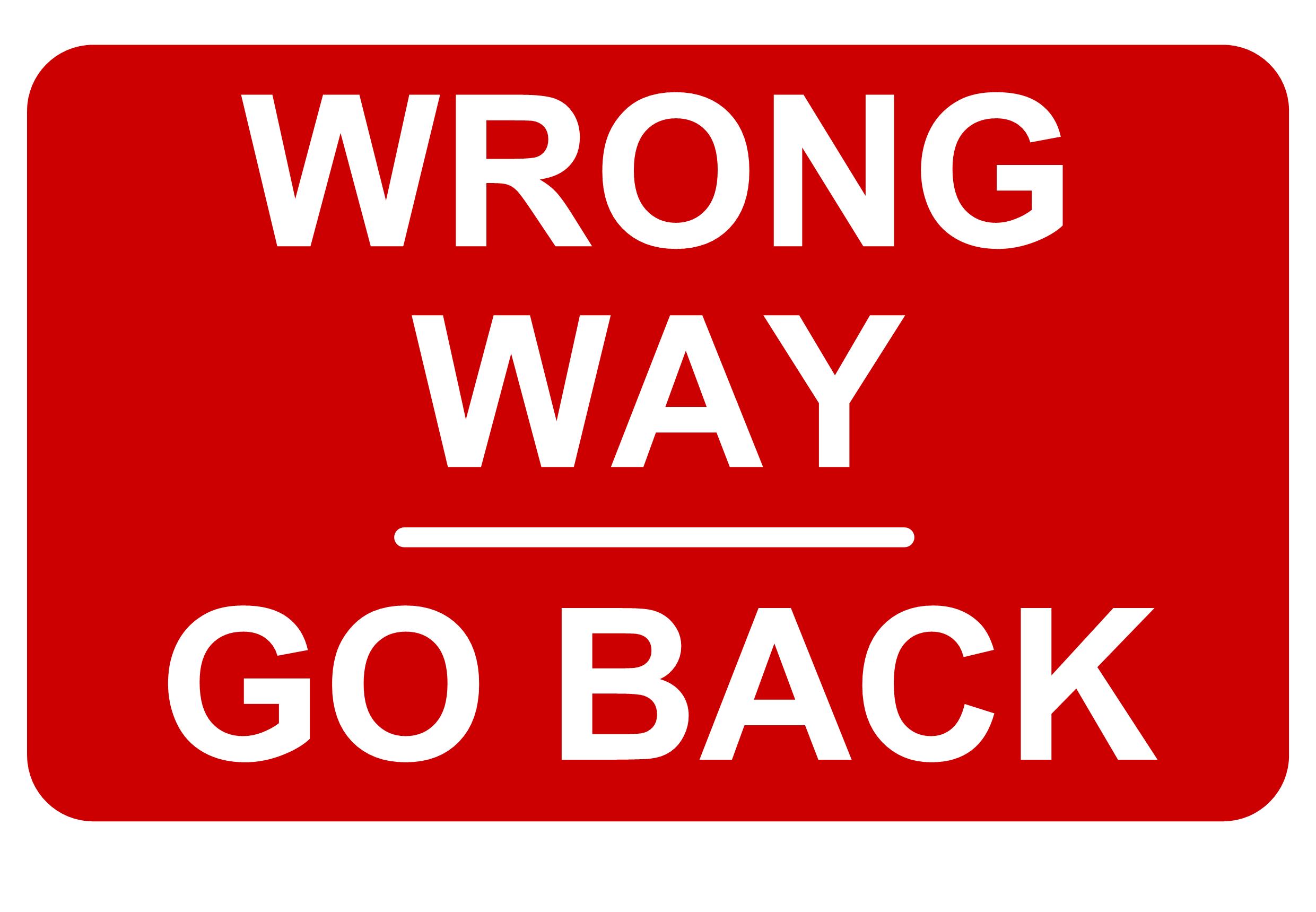
Wrong way! Go back!

19 Wednesday Nov 2014

Posted by Karen Lloyd AM in Politics and deaf

≈ 18 Comments

Tags

deaf, disabled people, Disabled People's Organisations, funding, representation

Wrong Way Go Back Sign

I’m worried. I am very worried. You should be too.

Many national organisations representing people with disabilities are about to lose their funding, including Deaf Australia, which represents me.

If this happens, Deaf Australia could be forced to return to what it was in the 1980s, a small volunteer-run organisation with no funds. But in the 1980s volunteering was a strong part of our culture.  The world is different now. People volunteer a lot less.

What will life be like for us if this happens?

Not good. Not good at all.

The price of liberty, they say, is eternal vigilance. The progress our representative organisations have made for us over the years has been about our human rights, our liberty.

For deaf people, the National Relay Service, new and improved interpreting services, captioning, Auslan/English bilingual education and early intervention; all these things give us access and the freedom to make our own choices. For people with other disabilities, it means things like accessible premises and transport.

When funding for organisations that advocate for us is gone, who will be there to be vigilant for us?

The gains we have made will be eroded. The onslaught has already begun: just a couple of weeks ago the government introduced a bill into Parliament seeking to wind back compulsory reporting and other protections of TV captioning.

With interventions from Deaf Australia and other organisations , and Get Up petitions signed by many of us, this bill has now been referred to a Senate committee.  We still have a chance of retaining these protections, so long as organisations like Deaf Australia are able to do this work of fighting to protect our rights.

Without Deaf Australia and similar organisations for other disability groups what will happen in these situations?

We will all be on our own, fighting for our rights ourselves and struggling to be heard.

Years ago on my way to work each morning at the State Library of NSW, I used to walk past NSW Parliament House and often there would be a lone person outside the fence with a placard, sometimes a small group of people. And always I’d think to myself: “You’re wasting your time. You haven’t got a hope in hell of having your issue heard.”

This will likely be us soon.

The threat to our ability to be heard, and ultimately our liberty, is happening because the Australian Government is introducing a new funding model.  Currently peak representative organisations are funded under a program called National Secretariat Funding. The new program is called Sector Development for Disability Representative Organisations (SDDRO).

It was released in July this year. When I looked at the information I was horrified.  In a nutshell, instead of funding 13 national disability representative organisations as they do now, government wants to fund seven. Instead of the recurrent funding they were receiving, everyone had to apply for funding in a competitive tender.  The outcome is expected to be known in December.

The seven disability ‘population’ groups that will be funded under this new SDDRO model are: women, Aboriginals, people from a Cultural and Linguistically Diverse (CALD) background, children, service providers and two cross-disability consortiums.

So five organisations currently funded will likely continue to be funded. Eight will be out in the cold. These eight plus any others not currently funded but needing funds, will have to squeeze into the two cross disability consortiums.

Only three of the five are actually Disabled Person’s Organisations (DPOs – organisations controlled by people with disabilities themselves); one is controlled by parents and one represents service providers. Why will service providers be funded to advocate for themselves when so many DPOs won’t be? Why are the interests of service providers more important than the interests of the people who use their services? Go figure!

Each of the seven organisations/consortiums will get $300,000 per year. (Most get about $165,000 now; National Disability Services, representing service providers, gets about $350,000 now.)

So if there are, say, 15 organisations in a cross-disability consortium, then each will perhaps get $20,000. If the consortium’s application is successful; it might not be, in which case they will get nothing.

According to government, this new model is their way of ‘encouraging’ the disability sector to ‘organise itself’.  Fiddlesticks I say!

Why has government decided to do this?

It has been said that the National Disability Insurance Scheme (NDIS) will give people with disabilities the support they need, so most won’t need advocacy anymore.

More fiddlesticks!  Many things are not included in the NDIS: education, employment, health services, transport and so on. We still need advocacy for these things.  We still need advocacy to ensure the NDIS does what it should!

And anyway, bureaucrats in the Department of Social Services have been working on a new funding model for years, since long before the NDIS was a blip in Bruce Bonyhady’s imagination.  I know this because I was one of the people ‘consulted’ about it over many years.

Government is constantly bombarded by requests to fund representative organisations. Many disability groups receive none, e.g., people with Down Syndrome and people with autism. Government has constantly cried “no money!”  Yet a few years ago Children with Disability Australia, run by parents, received funding for the first time.

Why has government decided to fund what they call ‘population groups’ – i.e. women, children, Aboriginals, and people from a CALD background – and force what they call ‘diagnostic groups’ into cross-disability consortiums that have to thinly share funding?

One, they say the model is based on the United Nations Convention on the Rights of Persons with Disabilities (UNCRPD).  The UNCRPD talks about all people with disabilities collectively and it specifically refers to women, children, Indigenous and ethnic people.

Two, they say that the new funding model discards the ‘medical’ model and uses the ‘social’ model for which we have all been advocating.

Both of these rationales are disgraceful misinterpretations, pathetic excuses to narrow down funding decisions.

The UNCRPD also refers to many other ‘population’ groups such as race, colour, religion, and to specific ‘diagnostic’ disability groups such as deaf people and blind people and their specific needs such as sign language and Braille.  Government has simply cherry picked a few ‘flavours of the month’.

And clearly they do not understand what a ‘social’ model for disability means.

A ‘medical’ model treats people as having medical problem that need to be fixed. A ‘social’ model treats us as a whole person and fixes the social environment so it includes us.

But Government has misinterpreted this to mean that it’s not about medical diagnoses anymore; therefore, ‘diagnostic groups’ (deaf, blind, autistic, intellectual etc) no longer need attention or significant funding.  Only ‘social’ groups like women, children, Aboriginal and CALD people do!

They have not understood or have ignored, for example, that while some deaf women do have issues that are women’s issues such as domestic violence, most of their issues are communication issues directly related to deafness.  A women’s organisation isn’t going to be focussed on communication: it’s a deaf issue, not a women’s issue.

And who’s going to be looking after the deaf men’s communication issues?

They have not understood that in cross disability consortiums someone still has to provide expert advice on the rights of specific disability groups. If representative organisations don’t have sufficient funding to do this then the voice of these groups will not be heard.

If all this didn’t have such disastrous consequences for so many millions of us, its stupendous stupidity would be hilarious.

After all the work so many of us did on explaining all this to government in so many ‘consultations’ it is so disheartening that they have made these decisions that disenfranchise so many.

They are going the wrong way! They need to go back and rethink the whole thing!

The other day, someone remarked that it’s probably too late to do anything about this new model. That was what motivated me to write this post.

It’s not too late. Final decisions are expected in December. Government can change course at any time.

Government can decide to throw out this disastrous new model. They can renew the funding that peak disability organisations currently get for another year or three and they can go back to the drawing board. They can, for once, actually listen to people with disabilities. They can do the right thing.

It’s time for all of us to stand up and tell them this is what they must do.

People have asked me, “Why aren’t representative organisations saying much about this? Why aren’t they making more noise?”

These organisations are between a rock and a hard place. It’s hard for them to know the best way to deal with this. If they say too much and seriously anger government they could ruin their chance for funding of any kind. If they say too little, they could miss a fairer deal.

And anyway, government – Ministers and bureaucrats – won’t talk to them about it while funding decisions are in process.

So it’s up to us, the community, to do something. The organisations that represent us and our disabled family members and friends now need us to stand up for them.

If we don’t, they may no longer be there for us, they may not be able to protect our rights anymore.

Everyone can help, whether you are disabled or not.

Send an email to Kevin Andrews, Minister for Social Services kevin.andrews.mp@aph.gov.au  and to Mitch Fifield, Assistant Minister for Social Services senator.fifield@aph.gov.au

Tell them:

The new Sector Development for Disability Representative Organisations funding model will be disastrous for millions of disabled people and is the wrong thing to do. The government needs to throw it out and develop a new model that looks after everyone fairly, not just a few selected ‘population’ groups and service providers.  Until government has done this, the current National Secretariat Funding model needs to be retained.

Remember to include your name in the email, and something in the subject field, e.g.: Funding for disability representative organisations.

And send a copy of your emails to your local Member of Parliament. Don’t know who your local member is or their email address? Find out here: http://www.australia.gov.au/faq/which-federal-electorate-do-i-live-in

To find your local MP’s email address go to: http://www.aph.gov.au/~/media/03%20Senators%20and%20Members/32%20Members/Lists/MemList.pdf

Please do it NOW! Before it’s too late!

Follow Life and Deaf on WordPress.com

Tags

acceptance advocacy allies Armidale NSW Auslan ballet bilingualism Blue Mountains NSW Christmas citizenship civic duty cochlear implants Colin Allen communication Coronavirus COVID-19 crafts crochet culture dance deaf Deaf Australia deaf children Deaf clubs Deaf community death Dimity Dornan disability discrimination disabled people Disabled People's Organisations Drisana Levitzke-Gray dying early intervention Etsy eyes family forgiveness friends funding Gaye Lyons Gostwyck Chapel Govetts Leap gratitude grief Hear and Say Centre hearing aids Isolation jury duty knitting language acquisition life skills macular hole surgery Miallo music noisy neighbours Norman Lindsay politics Regional Australia representation sewing sheds shopping speech therapy Springwood NSW sugar farms supermarkets Sydney NSW Sydney Writers' Festival technology The Voice TV Three Sisters travel University of New England Uralla NSW Woolworths

Categories

  • Culture and deaf
  • Deaf community
  • Exploring the chestnuts
  • Health and deaf
  • Hearing and deaf
  • Politics and deaf
  • Travel and deaf
  • Uncategorized

Blog at WordPress.com.

  • Subscribe Subscribed
    • Life and Deaf
    • Join 47 other subscribers
    • Already have a WordPress.com account? Log in now.
    • Life and Deaf
    • Subscribe Subscribed
    • Sign up
    • Log in
    • Report this content
    • View site in Reader
    • Manage subscriptions
    • Collapse this bar
 

Loading Comments...